Tuesday, April 11, 2006
Best Comedy of the Year
I'm expecting Peter Scolari's latest movie to be even funnier than any movie featuring Dwayne "The Rock" Johnson.


Monday, April 10, 2006

Tuesday, April 04, 2006
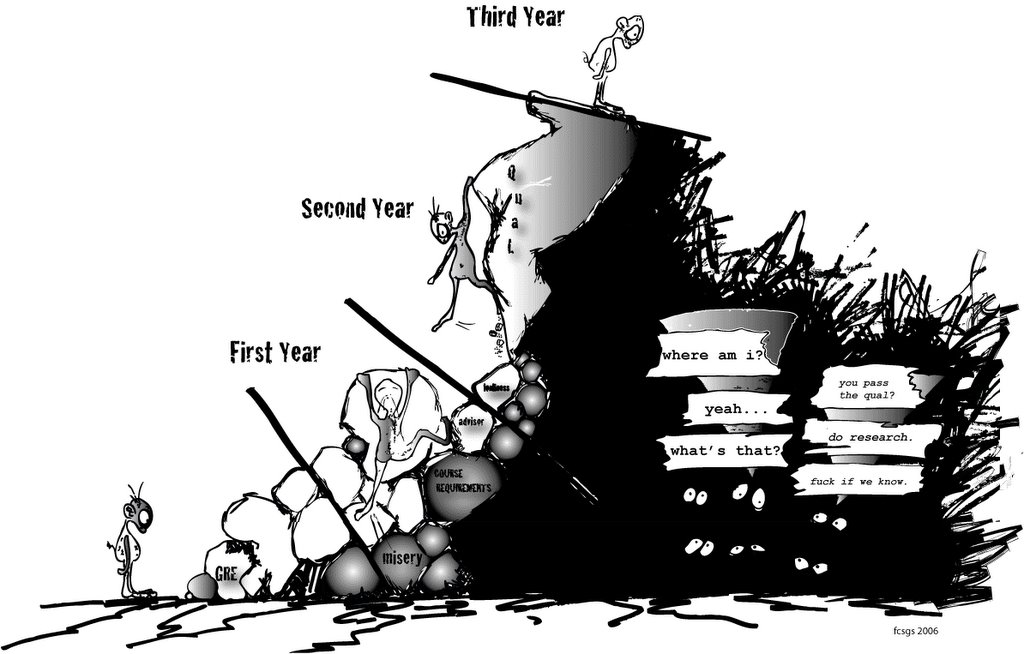
Saturday, April 01, 2006
No Comment
The Eller College will be offering a series of summer enrichment day camps during May - August. UA Staff and Faculty can enroll their children at $25 off the listed price! Visit our website for more information or to register!
TechDivas
Explore technology through exercises that appeal to girls: digital photography and scrap-booking, movie making, graphic design and the basics of technology made fun resulting in confidence and knowledge of IT in society.
DigiDudes
Explore Technology through exercises that appeal to boys: game development, virtual reality, digital photography, movie making, graphic design and the basics of technology made fun, resulting in knowledge and skills in IT resulting in technology confidence and knowledge of IT in society.
Contact information here.
Thursday, March 30, 2006
National "Ignore A Female Scientist" Week
This on Jane's post just today. Combining her post with my own week makes me think it's National "Ignore A Female Scientist" week.
Like Jane, I work with someone who consistently:
- Interrupts me,
- Disregards my ideas with no rationale,
- Tells me my ideas are wrong, only to repeat them back to me as his own,
- Ignores my intellectual presence.
I've taken all measures I think I possibly can. I've tried to be very direct with this person. I've spoken to my own advisor about it, and was told to cooperate. I've spoken to the Assistant Dean of Engineering, to the Graduate Advisor, to other faculty in the department. I've tried all their advice. Perhaps I'm doing something wrong, but even with all their advice, I've not been able to get this man to treat me with any kind of common courtesy.
It would be one thing if he were just a jerk. Unfortunately, I'm starting to see how his behavior is becoming an obstacle to my own intellectual development, academic success, and general happiness. The work I do for him is simply implementing his ideas, many of which are very mediocre.
What's ultimately frustrating to me is that the only next step I can see to correcting his behavior would be to file a formal complaint with the student grievance committee at the University of GradShitTownVille. I have no information about the formal grievance process, and I'm very hesistant to make a formal complaint as a result. Moreover, graduate students are not generally told that this process exists, and I had to make an inquiry just to find out that there is a process.
If I still worked in Industry, there would be more avenues through which I could resolve this problem. For example:
In Industry, I could quit my job, and find a healthier company. I cannot quit a school and go to another school so easily, though more and more I'm thinking of quitting altogether.
In Industry, I could discuss the issue with human resources, and the issue would come up in his annual review with his own boss. At the University of GradShitTownVille, there are no annual reviews that take student input into consideration.
In Industry, there are other safeties which would not require any action of my own. At IBM Research for example, minorities are tracked according to managers. If a given manager has a history of losing minorities to other managers and other groups, a flag is raised.
Like Jane, I work with someone who consistently:
- Interrupts me,
- Disregards my ideas with no rationale,
- Tells me my ideas are wrong, only to repeat them back to me as his own,
- Ignores my intellectual presence.
I've taken all measures I think I possibly can. I've tried to be very direct with this person. I've spoken to my own advisor about it, and was told to cooperate. I've spoken to the Assistant Dean of Engineering, to the Graduate Advisor, to other faculty in the department. I've tried all their advice. Perhaps I'm doing something wrong, but even with all their advice, I've not been able to get this man to treat me with any kind of common courtesy.
It would be one thing if he were just a jerk. Unfortunately, I'm starting to see how his behavior is becoming an obstacle to my own intellectual development, academic success, and general happiness. The work I do for him is simply implementing his ideas, many of which are very mediocre.
What's ultimately frustrating to me is that the only next step I can see to correcting his behavior would be to file a formal complaint with the student grievance committee at the University of GradShitTownVille. I have no information about the formal grievance process, and I'm very hesistant to make a formal complaint as a result. Moreover, graduate students are not generally told that this process exists, and I had to make an inquiry just to find out that there is a process.
If I still worked in Industry, there would be more avenues through which I could resolve this problem. For example:
In Industry, I could quit my job, and find a healthier company. I cannot quit a school and go to another school so easily, though more and more I'm thinking of quitting altogether.
In Industry, I could discuss the issue with human resources, and the issue would come up in his annual review with his own boss. At the University of GradShitTownVille, there are no annual reviews that take student input into consideration.
In Industry, there are other safeties which would not require any action of my own. At IBM Research for example, minorities are tracked according to managers. If a given manager has a history of losing minorities to other managers and other groups, a flag is raised.
Oil Addict
"I love my country, too. The people with the yellow 'Support Our Troops' magnets on their SUVs, they're the ones that really need to stop and think," White says. "They need to follow the path back to where we are now. Every drop of blood that's spilled over there comes back to them."--
Taken from "My Name Is Randy, And I'm Addicted To Oil."
Iraqi Free Dumb
An American soldier, born in Sweet Home, OR, publishes his journal about his experiences in Iraq.
The full text is here.
May 30
It may just be my newfound cynicism, but I believe these journals to be more comical than historical. These people really have no control over anything going on here.
I've concluded that my time here will not be a total loss: Although I won't get to fight for democracy against the "Axis of Evil," I will save money and get into better shape. It's kind of like a workout program that pays you, a yearlong health spa. That is what it is, Club Iraqi Free Dumb. It has to be that, because it can't be a real war. If you don't believe me, look in the PX [commissary]. They sell a wide selection of incredibly corny T-shirts like, 'Who's your Baghdaddy?' These are such moronic attempts to capitalize on my violent health spa, but these things are selling like hotcakes. Do you think they sold D-Day T-shirts? Who's your D-Day Daddy? How about the invasion of Normandy?
The full text is here.
Friday, March 24, 2006
What am I, a chicken?
Recently took a trip to Texas to attend a conference. Met a guy from New York during my "student volunteer work" (translation: mundane tasks which eat up a lot of good conference going time, but let me attend for free since I didn't get any funding to go). We were just chatting about graduate school. He was complaining about his advisor, and I said, "At least your advisor isn't as bad as that Hwang guy, making his students donate their eggs for research." And then I made some joke about how maybe I should donate some of my eggs to get money to go to conferences. The look on his face was disturbing. I paused. He asked,
"What do you mean 'egg-s?'"
My head was racing. I couldn't figure out if he was asking me how to donate eggs, the actual surgical technique involved in obtaining the eggs, how I could donate multiple eggs at once, or how I could make the choice to donate my eggs. After some further questioning, he finally asked,
"How do you donate a bunch of eggs? Women just make one egg every month, right?"
And I was immediately reminded of this post in which I complain that there just isn't enough sex education in America.
And so, at the volunteer desk of a computer science conference, I'm explaining to a 28 year old graduate student about how human eggs are created during a female embryo's development in the womb, that women have all their eggs when they are born, that thousands of eggs are lost to apoptosis, and that only a few hundred will actually be viable. I told him about how an ovary is about the size of an almond and how the eggs are ejected from ovarian follicles that contain the eggs. I told him about how the ovaries aren't actually connected to the fallopian tubes, and that if one fallopian tube is broken or infected, the other will actually reach around to the opposite ovary to get the next egg. I told him that women who donate eggs inject themselves daily with a series of hormones that cause multiple eggs to be ejected during a single cycle. On the one hand, I couldn't believe that I was telling this to a grown adult, but on the other hand, I was proud of the guy for listening to all of it. At the end of the lesson he asked,
"How do you know all this stuff?"
I simply replied,
"I read books."
I'll admit, my sex education classes in middle school and high school were really boring. Only in the past few years have I learned all the cool stuff. In sex education, I was always shown this picture which looked more like a goat than a grouping of organs. I was given the run-down of the 28-day menstrual cycle. I wasn't told about all the really cool things that a woman's body could do. I also wasn't told other intriguing things like how medical and anthropological research only have THEORIES as to why women have breasts or why women menstruate, and that we actually don't know a lot about the human body. I think that sex education, even without mention of condoms (see other post), could really benefit from these additions. Plus gross pictures, are a lot more fun than this.
"What do you mean 'egg-s?'"
My head was racing. I couldn't figure out if he was asking me how to donate eggs, the actual surgical technique involved in obtaining the eggs, how I could donate multiple eggs at once, or how I could make the choice to donate my eggs. After some further questioning, he finally asked,
"How do you donate a bunch of eggs? Women just make one egg every month, right?"
And I was immediately reminded of this post in which I complain that there just isn't enough sex education in America.
And so, at the volunteer desk of a computer science conference, I'm explaining to a 28 year old graduate student about how human eggs are created during a female embryo's development in the womb, that women have all their eggs when they are born, that thousands of eggs are lost to apoptosis, and that only a few hundred will actually be viable. I told him about how an ovary is about the size of an almond and how the eggs are ejected from ovarian follicles that contain the eggs. I told him about how the ovaries aren't actually connected to the fallopian tubes, and that if one fallopian tube is broken or infected, the other will actually reach around to the opposite ovary to get the next egg. I told him that women who donate eggs inject themselves daily with a series of hormones that cause multiple eggs to be ejected during a single cycle. On the one hand, I couldn't believe that I was telling this to a grown adult, but on the other hand, I was proud of the guy for listening to all of it. At the end of the lesson he asked,
"How do you know all this stuff?"
I simply replied,
"I read books."
I'll admit, my sex education classes in middle school and high school were really boring. Only in the past few years have I learned all the cool stuff. In sex education, I was always shown this picture which looked more like a goat than a grouping of organs. I was given the run-down of the 28-day menstrual cycle. I wasn't told about all the really cool things that a woman's body could do. I also wasn't told other intriguing things like how medical and anthropological research only have THEORIES as to why women have breasts or why women menstruate, and that we actually don't know a lot about the human body. I think that sex education, even without mention of condoms (see other post), could really benefit from these additions. Plus gross pictures, are a lot more fun than this.
Tuesday, March 21, 2006
Mixed Messages
Since I'm attending a highly rated university, I should aim for a tenure track position. At least, that's what the talking heads say. But the message I get from looking at these graphs is rather different.


Wednesday, March 08, 2006
Monastic life
Taken from "A Day in the Life of a Catholic Monk"
Hm. With just a little editing...
The lesson: Monks get more sleep than I do. Maybe I should be a monk.
For most people, the only monks they come across are in Brother Cadfael or The Name of the Rose. It often comes as a surprise to learn that they are also real people. There are still monasteries of monks and nuns in England, most of them belonging to the Roman Catholic Church, all of them witnessing to God by their life of prayer and by a rich variety of works including teaching, running parishes, giving retreats, creating beautiful objects like stained glass and ceramics, and inspiring others with uplifting music and worship. Unlike missionaries and friars, who travel about quite a lot in the course of their work, monks tend to stay put in one place, so that the monastery which they make their home becomes a focus for the prayer life of the local community and a stable point in a rapidly changing world.
During Mass, The whole community is gathered together for the celebration of the eucharist, in which we remember the saving sacrifice of Christ, and renew the offering of ourselves to God. Afterwards, the monks go about their different jobs, whether it be teaching in the school, looking after a local parish, or dealing with visitors. In the middle of our working day, we pause to remember that it is God who gives value to our work and sustains us in our labours. This is followed by lunch. We begin by singing grace together; then, as we eat in silence, one of the brethren reads to us an extract which the Abbot has chosen: it might be an academic article from a journal, or a sermon or lecture. At the end of the day is Compline. It is the last part of the Divine Office, which we sing by heart in the darkened Church. Afterwards, there is silence in the monastery until breakfast the next morning. Some monks will go to bed soon afterwards; for others there is still work to be done: the school will not quieten down until 11.30 p.m. I tend to get to bed around 10.00 p.m.
Hm. With just a little editing...
For most people, the only graduate students they come across are in The Paper Chase. It often comes as a surprise to learn that they are also real people. There are still graduate schoolsof monks and nuns in England, most of them belonging to the state, all of them witnessing to NSF by their life of research and by a rich variety of works including teaching, running demos, giving retreats, creating beautiful objects like posters, and boring others with boring papers. Unlike professors, who travel about quite a lot in the course of their work, graduate students tend to stay put in one place, so that the graduate school which they make their home becomes a focus for the academic life of the local community and a stable point in a rapidly changing world.
During the research group meeting, The whole group is gathered together for the celebration of the advisor, in which we remember the saving sacrifice of funding, and renew the offering of ourselves to our advisor. Afterwards, the graduate students go about their different jobs, whether it be teaching in the school, looking after an undergrad, or dealing with visitors. In the middle of our working day, we pause to remember that it is our advisor who gives value to our work and sustains us in our labours. This is followed by lunch. We begin by singing grace together; then, as we eat in silence, we read:one of the brethren reads to us an extract which the Abbot has chosen:it might be an academic article from a journal, or an e-mail. At the end of the day is finally getting to work on research.It is the last part of the Divine Office, which we sing by heart in the darkened Church.Afterwards, there is silence in the office until breakfast the next morning. Some graduate students will go to bed soon afterwards; for others there is still work to be done: the school will not quieten down until 4:00 a.m. I tend to get to bed around 1 a.m.
The lesson: Monks get more sleep than I do. Maybe I should be a monk.
Thursday, February 23, 2006
Big sigh
A bad day in a string of bad days. I could post. I could talk about naive comments and alarmist fools. I could talk about how, once again, I've committed to way too many things and as a result, I'm back to crying everyday. I could complain about the two Indian fellows in my cube farm arguing about the structure of family names in their respective villages. I could try to articulate the exact kind of chocolate cupcake I am craving.
I will not do any of these things.
Instead, I will post a cute picture.

Have a nice day.
I will not do any of these things.
Instead, I will post a cute picture.

Have a nice day.
Wednesday, February 22, 2006
Bea Arthur Wrasslin'
Preparing for a computer science education conference. Reading papers about gender, pipelines, and psychoanalytic feminism.
Here's the thing. This high school girl, wherever she is, isn't too far off the mark from where I'm sitting. And yes, I'm sitting in front of a computer. I do work all the time, I do focus on work like my dog focuses on cat turds, and I actually do hate talking on the phone.
I admit, I don't sit in front of the computer EVERY day. I have finally restructured my schedule so I don't sit in front of the computer every day. Fridays are what I call my "face day." I have a lot of really productive meetings on Fridays in which I get to work with other people. On Saturdays, I take off a half-day (maybe the whole thing if I'm particularly mentally unbalanced), but then I start working at the computer again on Sunday.
So, do I live this way because I want to, or because the computing culture at my department forces me to? If this high school girl is so right on the mark, do I really feel like telling her that computer science is for girls, too? And not just girls. Can I honestly say, without lying through my diet coke stained teeth, to a roomful of extroverted people who want to work on teams and do interesting work without sitting in front of a computer all the time, that computer science is for THEM too?
I have no answer. I just go back and forth. Some days I just feel like a genderless machine. Other days, I feel I don't belong here. Other days, I'm ready to burn down the school if that's what it will take to get some attention on the issue of diversity in computer science.
All this back and forth, and I feel like Bea Arthur wrasslin' a velociraptor.
These stereotypes did not lessen with age, as high school students expressed the same impressions. One high-school student described technology workers as "smart...They've got to be kind of nerdy," and added, "I'm not that type of person...They don't do anything. They don't talk on the telephone...they don't want to do anything by study...it's not a good life." Her description paints a picture of an antisocial person, who is single minded in his or her focus on work. By distancing herself from "that type of person," this student is creating a barrier between herself and people who have careers in technology.
Here's the thing. This high school girl, wherever she is, isn't too far off the mark from where I'm sitting. And yes, I'm sitting in front of a computer. I do work all the time, I do focus on work like my dog focuses on cat turds, and I actually do hate talking on the phone.
I admit, I don't sit in front of the computer EVERY day. I have finally restructured my schedule so I don't sit in front of the computer every day. Fridays are what I call my "face day." I have a lot of really productive meetings on Fridays in which I get to work with other people. On Saturdays, I take off a half-day (maybe the whole thing if I'm particularly mentally unbalanced), but then I start working at the computer again on Sunday.
So, do I live this way because I want to, or because the computing culture at my department forces me to? If this high school girl is so right on the mark, do I really feel like telling her that computer science is for girls, too? And not just girls. Can I honestly say, without lying through my diet coke stained teeth, to a roomful of extroverted people who want to work on teams and do interesting work without sitting in front of a computer all the time, that computer science is for THEM too?
I have no answer. I just go back and forth. Some days I just feel like a genderless machine. Other days, I feel I don't belong here. Other days, I'm ready to burn down the school if that's what it will take to get some attention on the issue of diversity in computer science.
All this back and forth, and I feel like Bea Arthur wrasslin' a velociraptor.
Monday, February 20, 2006
Storytime
Hey kids, circle round! Auntie FCSGS is going to tell you a story! And by story, she's going to tell you a thinly-veiled allegory involving anthropomorphised animals in the style made legendary by her good ol' buddy Clive.
Once upon a time in 1907, shortly after the first anti-rabbit fence was built in Australia, a hungry rabbit named Mocra sat solemnly in the dust of the Northern Territory. He was an ancestor of one of the original rabbits released in Australia by Thomas Austin in 1859 and he was proud of his great heritage. He was a proud rabbit in general, and would not hesistate to tell other rabbits of his great sacrifices and those of his lineage.
On this particular day, Mocra the rabbit was particularly hungry. The anti-rabbit fence kept him out of his favored farms, and he hadn't anywhere to gather carrots and lettuces. He sat in the dust of the Northern Territory and grumbled while his tummy rumbled.
After many hours of grumbling, a grey hare came by. The rabbit said, "Hello. I'm hungry. Do you have any food?" Mocra replied, "You cannot possibly be as hungry as I. I was one of the first rabbits caught behind the fence. In fact, my ancestors, brought here by Thomas Austin in 1859 were those especially victimized by hunger, for it was they who were the first domestic rabbits who had to learn to live in the wild..."
Mocra the rabbit could not finish, because the grey hare merely scampered away in search for food. Mocra sat in the dust of the Northern Territory and grumbled while his tummy rumbled.
After many days of grumbling, five white bunnies and their mother came by. The mother said, "Hello. We are hungry. We are on our way to look for food in the West. Would you like to join us?" Mocra replied, "You cannot possibly be as hungry as I. You are a mother bunny, and you must have a father bunny to provide for you. In fact, my male ancestors, brought here by Thomas Austin were those especially victimized by hunger, for they had many mother bunnies to provide for..."
Mocra the rabbit could not finish, because the white bunnies and their mother merely scampered away to the West. Mocra sat in the dust of the Northern Territory and grumbled while his tummy rumbled.
After many days of grumbling, a rabbit of the Great Sandy Desert came by. The rabbit said, "Hello. There is great news of food in the harbour! We only need to crawl beneath a hole in the fence. We can feed our hunger there!" Mocra replied, "You cannot possibly be as hungry as I. You come from the desert where there are many cacti for feasting. You must certainly have been to the cape where there are many shipments for scavanging. In fact, my ancestors..."
Mocra the rabbit could not finish, because the rabbit of the Great Sandy Desert merely scampered away to the harbour. Mocra sat in the dust of the Northern Territory and grumbled while his tummy rumbled.
One day, Mocra caught the Myxoma Virus and died.
The Moral: Wallowing in your own self-pity about problems in the face of those who work towards solutions will get you nowhere.
Once upon a time in 1907, shortly after the first anti-rabbit fence was built in Australia, a hungry rabbit named Mocra sat solemnly in the dust of the Northern Territory. He was an ancestor of one of the original rabbits released in Australia by Thomas Austin in 1859 and he was proud of his great heritage. He was a proud rabbit in general, and would not hesistate to tell other rabbits of his great sacrifices and those of his lineage.
On this particular day, Mocra the rabbit was particularly hungry. The anti-rabbit fence kept him out of his favored farms, and he hadn't anywhere to gather carrots and lettuces. He sat in the dust of the Northern Territory and grumbled while his tummy rumbled.
After many hours of grumbling, a grey hare came by. The rabbit said, "Hello. I'm hungry. Do you have any food?" Mocra replied, "You cannot possibly be as hungry as I. I was one of the first rabbits caught behind the fence. In fact, my ancestors, brought here by Thomas Austin in 1859 were those especially victimized by hunger, for it was they who were the first domestic rabbits who had to learn to live in the wild..."
Mocra the rabbit could not finish, because the grey hare merely scampered away in search for food. Mocra sat in the dust of the Northern Territory and grumbled while his tummy rumbled.
After many days of grumbling, five white bunnies and their mother came by. The mother said, "Hello. We are hungry. We are on our way to look for food in the West. Would you like to join us?" Mocra replied, "You cannot possibly be as hungry as I. You are a mother bunny, and you must have a father bunny to provide for you. In fact, my male ancestors, brought here by Thomas Austin were those especially victimized by hunger, for they had many mother bunnies to provide for..."
Mocra the rabbit could not finish, because the white bunnies and their mother merely scampered away to the West. Mocra sat in the dust of the Northern Territory and grumbled while his tummy rumbled.
After many days of grumbling, a rabbit of the Great Sandy Desert came by. The rabbit said, "Hello. There is great news of food in the harbour! We only need to crawl beneath a hole in the fence. We can feed our hunger there!" Mocra replied, "You cannot possibly be as hungry as I. You come from the desert where there are many cacti for feasting. You must certainly have been to the cape where there are many shipments for scavanging. In fact, my ancestors..."
Mocra the rabbit could not finish, because the rabbit of the Great Sandy Desert merely scampered away to the harbour. Mocra sat in the dust of the Northern Territory and grumbled while his tummy rumbled.
One day, Mocra caught the Myxoma Virus and died.
The Moral: Wallowing in your own self-pity about problems in the face of those who work towards solutions will get you nowhere.
Wednesday, February 15, 2006
Race from Asia Ending with Tulips
My old 14-inch Apple laptop is sitting on a shelf in my basement; a basement which I'm now calling the "Laptop Morgue." It's 12-inch replacement arrived today, having been shipped from China just yesterday. I'm slightly amused by the fact that my laptop arriving from China beat my boyfriend arriving from Japan today. It's a strangely contrived race, since my laptop had an Army of people in China, Alaska, and GradShitTownVille. The boyfriend has to carry his own luggage onto the plane. Unfair, I know. Who said life is....
Mom? No, that's my own voice. Sometimes my voice box gets stuck in a certain tone and I swear my mother is talking in my ear. Really it's the sound of my own voice.
fair. And so the Army sent my new laptop to me and the kind gentleman in a purple shirt who brought it to my door woke me up today. Since grad school, "THE CRACK OF DAWN" shifted from 5:30 am--the time I used to get up to go to the gym in North Portland--to 8:30 am.
I don't even exercise in the morning anymore. I swim in the evening.
And I swam last night, but stop interrupting me Ms. Italics! The man in a purple shirt--which makes me think of Tom Hanks' "The Man With One Red Shoe"--woke me from a dream that actually didn't involve people trying to kill me. I dreamt of the garden I'd planted at my mother's third husband's house. In reality, he lived on half an acre, and while I lived there, my mother and I filled as much as I could with gladiolas, lilies, columbine, and tulips. It was theraputic. It was over 10 years ago. In the dream, the garden had become wild and overrun with tulips. I sat in the backseat of a car, and as the car drove slowly past Battlecreek Road, I could see the tulips. It was the scene from Logan's Run, except replace the White House with my ex-step father's house and replace the ivy with tulips.
But Logan's Run is a really cheesie movie.
I agree. Which is why I must find it for next Cheesie Chick Flick Night.
Mom? No, that's my own voice. Sometimes my voice box gets stuck in a certain tone and I swear my mother is talking in my ear. Really it's the sound of my own voice.
fair. And so the Army sent my new laptop to me and the kind gentleman in a purple shirt who brought it to my door woke me up today. Since grad school, "THE CRACK OF DAWN" shifted from 5:30 am--the time I used to get up to go to the gym in North Portland--to 8:30 am.
I don't even exercise in the morning anymore. I swim in the evening.
And I swam last night, but stop interrupting me Ms. Italics! The man in a purple shirt--which makes me think of Tom Hanks' "The Man With One Red Shoe"--woke me from a dream that actually didn't involve people trying to kill me. I dreamt of the garden I'd planted at my mother's third husband's house. In reality, he lived on half an acre, and while I lived there, my mother and I filled as much as I could with gladiolas, lilies, columbine, and tulips. It was theraputic. It was over 10 years ago. In the dream, the garden had become wild and overrun with tulips. I sat in the backseat of a car, and as the car drove slowly past Battlecreek Road, I could see the tulips. It was the scene from Logan's Run, except replace the White House with my ex-step father's house and replace the ivy with tulips.
But Logan's Run is a really cheesie movie.
I agree. Which is why I must find it for next Cheesie Chick Flick Night.
Tuesday, February 07, 2006
Grammar Hotline
Until I was 17 years old I wanted to be an English professor. I loved teaching and I was fascinated by all the rules of grammar that could allow a person to construct a perfect, elegant sentence. At 17, I realized that majoring in English would likely get me as far as waitressing tables. My boyfriend at the time suggested I try Computer Engineering since I was good at math and liked working with my computer at home. And voila, here I am. Thanks Logan Rhodehamel.
When I got to college, I took a CLEP test and received 6 hours of English credit. I never took an English course again. I took Spanish Literature, Modern Art, and 8 hours of theology; including a course on Martin Luther, which I thought was hilariously rebellious as a Catholic University undergraduate. I also took Materials Science, Semiconductor Physics, Signal Processing, and two years of Electrical and Electronic Circuits. As a result, many grammar rules have become foggy for me. Is it "Software Engineering" or "software engineering?" Is it "Department of Computer Science" or "computer science department?" Some searching on the web led me to my new favorite thing: Delaware's Grammar Hotline.
The website also led me to two books I hope to find at the library. I need as much help as possible to write a fabulous research paper which will get accepted and therefore get me closer to my prelim.
When I got to college, I took a CLEP test and received 6 hours of English credit. I never took an English course again. I took Spanish Literature, Modern Art, and 8 hours of theology; including a course on Martin Luther, which I thought was hilariously rebellious as a Catholic University undergraduate. I also took Materials Science, Semiconductor Physics, Signal Processing, and two years of Electrical and Electronic Circuits. As a result, many grammar rules have become foggy for me. Is it "Software Engineering" or "software engineering?" Is it "Department of Computer Science" or "computer science department?" Some searching on the web led me to my new favorite thing: Delaware's Grammar Hotline.
The website also led me to two books I hope to find at the library. I need as much help as possible to write a fabulous research paper which will get accepted and therefore get me closer to my prelim.
Monday, February 06, 2006
During the blues show today
As some of you know, I am a DJ for the local community radio station. Today during the blues show, I played a song called "I'm a Woman" with the following lyrics:
Thank you Christine Kittrel. And Santa, if you are listening, bring me this for Christmas.
"I can make a dress outta a feed bag and I can make a man outta you."
Thank you Christine Kittrel. And Santa, if you are listening, bring me this for Christmas.
Monday, January 30, 2006
Shoe Shopping (Remotely) in Portland last weekend
One of the reasons I hate GradShitTownVille is because there is no decent shopping. Except for some disposable t-shirts and skirts at Old Navy, I've purchased very little here with regards to shoes and clothing. Last weekend, when I realized that I'd worn out the arch support on both my Keens AND my Merrels, I was determined to get new shoes.
I have weird feet; tres high arches. If I buy just any shoes, I suffer miserably in pain. I've become unhappy with Merrels and Danskos. Sadly, I have also recently become unhappy with my beloved Bastads. They are no longer comfortable for my broken-down feet. I'd tried on a pair of comfortable Sanitas in Portland last month, but didn't buy them. I was determined to find them again. Last weekend, I went to every store in GradShitTownVille that might possibly carry these Danish sweethearts of mine. Two hours later I hadn't found them.
So I called Shannon.
Shannon works at Clogs & More in Portland. It's a lovely store. It is set up so that all the shoes are out and available to try. I met her at the shoe store four months before I moved here and we've been friends ever since. When I'm in Portland, I like to go to the store and try on every pair of shoes while I chat with her.
On the phone, Shannon said she was busy and would call right back. I told her I'd already e-mailed her a photo of the shoes I wanted. She returned my call, reported that they had the shoe, and would send it to me. She got my credit card information. She promised she put a little note in with my shoes. We said our goodbyes so she could get back to work.
For 1 nanosecond, I panicked, thinking I might have to call her back. Then I laughed to myself, "Of course she knows my shoe size!"
I love our friendship.
I have weird feet; tres high arches. If I buy just any shoes, I suffer miserably in pain. I've become unhappy with Merrels and Danskos. Sadly, I have also recently become unhappy with my beloved Bastads. They are no longer comfortable for my broken-down feet. I'd tried on a pair of comfortable Sanitas in Portland last month, but didn't buy them. I was determined to find them again. Last weekend, I went to every store in GradShitTownVille that might possibly carry these Danish sweethearts of mine. Two hours later I hadn't found them.
So I called Shannon.
Shannon works at Clogs & More in Portland. It's a lovely store. It is set up so that all the shoes are out and available to try. I met her at the shoe store four months before I moved here and we've been friends ever since. When I'm in Portland, I like to go to the store and try on every pair of shoes while I chat with her.
On the phone, Shannon said she was busy and would call right back. I told her I'd already e-mailed her a photo of the shoes I wanted. She returned my call, reported that they had the shoe, and would send it to me. She got my credit card information. She promised she put a little note in with my shoes. We said our goodbyes so she could get back to work.
For 1 nanosecond, I panicked, thinking I might have to call her back. Then I laughed to myself, "Of course she knows my shoe size!"
I love our friendship.
Thursday, January 26, 2006
Perception
My parents divorced when I was 10. My mother went to night school to become a medical secretary. During the day, she worked as a restaurant hostess. Often I'd find her fallen asleep at the kitchen table. She worked hard, but with little reward. The year of the divorce, her earnings were $16,000. After she graduated, she found a job at the local hospital. Seeing her life had settled down, she started dating again. She never dated anyone too long. She was often in the stage of a relationship where she felt she had to impress the guy. If he went away on a business trip, she vowed to my brother and I that she would lose 10 pounds while he was gone.
I told this to my boyfriend on Tuesday when he left for Japan for three weeks. I told him rather than losing as much weight as I possibly could, I would read as many books as I possibly could. Fortunately, there is a good library in town. It's day three and I've read books five and six of the Lady Detective series and Steve Martin's Shopgirl.
I finished reading Shopgirl in the bathtub this evening. I was in the bath, trying to stave off the droplets of depression that were inking their way into my head. These droplets have plagued me since puberty, and without action on my part, they cloud my perception to its negative worst. I find myself a waste of time to my friends who are saints to put up with my horrible company. I cannot possibly graduate. I am a bad dog owner. I am an ugly human being.
In water, I find some relief from the little droplets. If it is a mild case, I take a bath. If it is a severe case, I must go to the swimming pool. I am comforted by the water. I relax, and the droplets rinse off me, bouncing away like warm mercury.
While bathing, I read a passage in Shopgirl about "The Conversation" people sometimes have about the rules of a relationship. The sayer explaining to the listener that they should both "Keep Their Options Open." The sayer is not heard, for the listener interprets it in a hopeful way. The sayer inwardly proclaims the relationship fair and will unintentionally harm the listener in the coming months.
Reading such a passage was not useful to my task. I've been the listener. I've heard similar speeches. I've been harmed. Small scabs were picked at and reopened. The droplets were absorbed further into my psyche, like a weary father coming home from graveyard shift, whispering "I'm home" to his household.
In this state, I am at the precipice of a possible emotional tail-spin. The act of self-loathing begins. I look down at my body in the bath tub and I hate it. I hate the extra weight I carry in my thick thighs. I hate my belly's overhang and its verticle stripe of black hair. I hate the horizontal gulch in my midsection where my pants clutch at my wasteline. I hate my face's suggestion of a double chin. I hate that I'm almost thirty and still hate my body. My life is a waste of time.
The bath has failed. I dress quickly in a flannel shirt and yoga pants. I drive to a campus pool. I go to a pool I've never gone before because the first campus pool has closed. The pool is hidden inside a building on the National Registry of Historic Places. The 12 foot ceilings are ticked by arches with guilded details. The wooden doors have wire reinforced windows. I find the locker room and change into my swimsuit. At the door to the pool, I inhale deeply to test my asthmatic lungs. I gauge that they will suffice without medication.
The pool is almost empty on this Friday night. There are two Chinese lap swimmers. The lifeguard is text-messaging something on his phone. I enter the pool and begin to swim. One of two things might happen. I might ease through water with strong arms and strong legs for a prescribed 30 minutes. I might fight the water and feel my lungs weaken. My laps could leave me escaped from the droplets, relaxed and too tired to let them in. My laps could leave me exhausted, frustrated and too weak to fight them.
I exit the pool, tired but successful. Leaving the building, still admiring the architecture, I am reminded of the Kennedy School in Portland. I imagine turning the corner to go to the movie theatre at the corner of the building to watch Dr. Strangelove for only $3. I marvel at how I am homesick after four years here, but I'm feeling okay.
Tomorrow will be better.
I told this to my boyfriend on Tuesday when he left for Japan for three weeks. I told him rather than losing as much weight as I possibly could, I would read as many books as I possibly could. Fortunately, there is a good library in town. It's day three and I've read books five and six of the Lady Detective series and Steve Martin's Shopgirl.
I finished reading Shopgirl in the bathtub this evening. I was in the bath, trying to stave off the droplets of depression that were inking their way into my head. These droplets have plagued me since puberty, and without action on my part, they cloud my perception to its negative worst. I find myself a waste of time to my friends who are saints to put up with my horrible company. I cannot possibly graduate. I am a bad dog owner. I am an ugly human being.
In water, I find some relief from the little droplets. If it is a mild case, I take a bath. If it is a severe case, I must go to the swimming pool. I am comforted by the water. I relax, and the droplets rinse off me, bouncing away like warm mercury.
While bathing, I read a passage in Shopgirl about "The Conversation" people sometimes have about the rules of a relationship. The sayer explaining to the listener that they should both "Keep Their Options Open." The sayer is not heard, for the listener interprets it in a hopeful way. The sayer inwardly proclaims the relationship fair and will unintentionally harm the listener in the coming months.
Reading such a passage was not useful to my task. I've been the listener. I've heard similar speeches. I've been harmed. Small scabs were picked at and reopened. The droplets were absorbed further into my psyche, like a weary father coming home from graveyard shift, whispering "I'm home" to his household.
In this state, I am at the precipice of a possible emotional tail-spin. The act of self-loathing begins. I look down at my body in the bath tub and I hate it. I hate the extra weight I carry in my thick thighs. I hate my belly's overhang and its verticle stripe of black hair. I hate the horizontal gulch in my midsection where my pants clutch at my wasteline. I hate my face's suggestion of a double chin. I hate that I'm almost thirty and still hate my body. My life is a waste of time.
The bath has failed. I dress quickly in a flannel shirt and yoga pants. I drive to a campus pool. I go to a pool I've never gone before because the first campus pool has closed. The pool is hidden inside a building on the National Registry of Historic Places. The 12 foot ceilings are ticked by arches with guilded details. The wooden doors have wire reinforced windows. I find the locker room and change into my swimsuit. At the door to the pool, I inhale deeply to test my asthmatic lungs. I gauge that they will suffice without medication.
The pool is almost empty on this Friday night. There are two Chinese lap swimmers. The lifeguard is text-messaging something on his phone. I enter the pool and begin to swim. One of two things might happen. I might ease through water with strong arms and strong legs for a prescribed 30 minutes. I might fight the water and feel my lungs weaken. My laps could leave me escaped from the droplets, relaxed and too tired to let them in. My laps could leave me exhausted, frustrated and too weak to fight them.
I exit the pool, tired but successful. Leaving the building, still admiring the architecture, I am reminded of the Kennedy School in Portland. I imagine turning the corner to go to the movie theatre at the corner of the building to watch Dr. Strangelove for only $3. I marvel at how I am homesick after four years here, but I'm feeling okay.
Tomorrow will be better.
Thursday, December 22, 2005
Feelings of Fraudulence
Christine Overall, in "A Feminist I: Reflections from Academia" does a very good job of describing the feelings of fraudulence that I mentioned in my last post. DC questioned that it's not just women who have these feelings, but men as well. I totally agree, but I failed to mention it in a post titled "Real Women." Let me summarize Dr. Overall's description here.
She says that these feelings of fraudulence in academia stem from many things. Foremost, for professors, there is this notion that you have to stand up in front of a classroom and teach and pontificate intelligently about topics in which you may not feel strengths. As graduate students, teaching assistants, research assistants, we experience this as well. We do research. We teach students. We are supposed to know this stuff, but we never feel that we know it as well as perhaps we "should." Thus, men and women can both feel this way. They all say to themselves, "Any minute now they'll figure out I don't belong here."
But consider what emwc notes. Women are leaving at faster rates. This is, in part, due to an even greater feeling of fraudulence. There's not one thing that causes this feeling. It's not like the head of my department approached me at one point and said, "You don't belong here. You should leave." It's the thousand paper cuts that I've discussed before. It's the professor that hits on her, the advisor that treats her like a secretary, the high school counselor that advises her against calculus, the stupid jokes by stupid guys about dumb women in front of her, that contributes to a woman's decision to leave computer science. It's a culture which favors the stereotypical geek male that posts comments like this on slashdot. It's a culture to which I've had to say many many times, "Fuck you."
Most recently, I've been thinking about bathrooms. At my old campus, the school was originally an all boys school. The engineering building had only men's bathrooms, and a women's bathroom resulted from repainting the sign on the door. The urinals were still there, which were admittedly a little startling the first time I saw them. This goes for some of the other engineering buildings on my present campus. The only reason there is a women's bathroom is because someone taped a "Women" sign over the "Men" door. The urinals are still in there. In my own building, there are no machines for feminine hygiene products, and I've received many a quiet IM from my female friends imploring me for any tampons I might have. I don't think anyone is intentionally leaving out tampon machines or leaving in urinals to make me flee science, but it's just one more thing I have to ignore.
I don't want to get in a discussion about who is better or worse off, because that is a very stupid discussion. If you look at all the stereotypes in which we are all raised, all genders arrive to computer science and graduate school with some baggage that could be very disabling. I'm just talking about my own experiences; as a female cs grad student. I don't mean to make the male reader, the transgendered reader, or any other reader feel marginalized because I'm not talking about everyone's experience.
She says that these feelings of fraudulence in academia stem from many things. Foremost, for professors, there is this notion that you have to stand up in front of a classroom and teach and pontificate intelligently about topics in which you may not feel strengths. As graduate students, teaching assistants, research assistants, we experience this as well. We do research. We teach students. We are supposed to know this stuff, but we never feel that we know it as well as perhaps we "should." Thus, men and women can both feel this way. They all say to themselves, "Any minute now they'll figure out I don't belong here."
But consider what emwc notes. Women are leaving at faster rates. This is, in part, due to an even greater feeling of fraudulence. There's not one thing that causes this feeling. It's not like the head of my department approached me at one point and said, "You don't belong here. You should leave." It's the thousand paper cuts that I've discussed before. It's the professor that hits on her, the advisor that treats her like a secretary, the high school counselor that advises her against calculus, the stupid jokes by stupid guys about dumb women in front of her, that contributes to a woman's decision to leave computer science. It's a culture which favors the stereotypical geek male that posts comments like this on slashdot. It's a culture to which I've had to say many many times, "Fuck you."
Most recently, I've been thinking about bathrooms. At my old campus, the school was originally an all boys school. The engineering building had only men's bathrooms, and a women's bathroom resulted from repainting the sign on the door. The urinals were still there, which were admittedly a little startling the first time I saw them. This goes for some of the other engineering buildings on my present campus. The only reason there is a women's bathroom is because someone taped a "Women" sign over the "Men" door. The urinals are still in there. In my own building, there are no machines for feminine hygiene products, and I've received many a quiet IM from my female friends imploring me for any tampons I might have. I don't think anyone is intentionally leaving out tampon machines or leaving in urinals to make me flee science, but it's just one more thing I have to ignore.
I don't want to get in a discussion about who is better or worse off, because that is a very stupid discussion. If you look at all the stereotypes in which we are all raised, all genders arrive to computer science and graduate school with some baggage that could be very disabling. I'm just talking about my own experiences; as a female cs grad student. I don't mean to make the male reader, the transgendered reader, or any other reader feel marginalized because I'm not talking about everyone's experience.
Wednesday, December 21, 2005
Real Women
From a comment on the previous post:
Like you said, L. Wu, I think it depends on what research you believe. While studies do show that grown men and women have different brain mappings, I don't think that really proves much. It has been suggested that hormones have an effect on brain development. It has been suggested that estrogen promotes mental skills while testosterone promotes better spatial skills. Still, studies on the brain show that there is a "use it or lose it" notion. Babies are born with twice the synapses needed in the brain. As the brain develops, neurons and synapses hook together to develop specific skills and abilities in humans. How these connections are made is still unknown, but due to this overdevelopment of synapses, there is synaptic pruning that takes place until the age of two. This pruning leaves only the fittest synapses in place. By the age of three, boys and girls can identify persons of the other gender, and by age 5 they have a very strong idea of what activities are for boys and which are for girls. Do boys play with trucks because they have a stronger spatial ability and are therefore attracted to trucks? Or do boys play with trucks because mom and dad give them trucks which leads to improved spatial ability? I think what I said before still stands. Men and women are different. We don't know exactly why. I'll admit, given my perspective as a female scientist, that I am more willing to believe that men and women are not wired differently, because I stand here as living proof that women can do men's work.
Something that many of the women in science fields talk about is the "Charlatan Effect" or feeling "like a fraud." They say things like,
And,
In part, we feel that we don't belong in science because we are women, but as my friend H. has recently pointed out, "we aren't real women either." We code, we test specimens, we integrate, we derive, we induct, we recurse, we prove, we analyze. We don't own purses, we don't wear heels, we don't wear makeup, we don't like shopping, we don't scrapbook, we don't mother.
Which begs the question, what is a real woman? I was trying to gather up an image of a "real woman" today and could think of only Reese Witherspoon. She's beautiful. She's graceful. She has a successful career. She is a mother. She is blonde. But because I'm not Reese Witherspoon (or behave in any way that exhibits Reese Witherspooness), does that mean I am not a real woman? Like most women, I loathe my body, but unlike most women, I don't wear makeup. Like most women, I cry irrationally during my period, but unlike most women, I haven't worn a skirt in months. These are silly juxtapositions, but it asks an important question. How many women identify themselves as "real women?"
We've been taught that gender is binary. A person is a girl or a boy. There is nothing in between. But like Kinsey introduced with his measure of sexuality, my friend H. suggests that there is also a gradient of gender. A person can have elements of male or female, despite their ovaries or scrotum. A person can be more male or more female than his or her peers. While, my perspective is much different from that of L. Wu, together we are two women who challenge a huge
majority of the stereotypes of women. I am a woman in a "man's field." L. Wu identifies as a woman. In a way, I think that L. Wu and I are making the same point. Neither of us are "real women," (whatever the hell that even means) but we are women all the same.
I think it depends on what research you believe. My impression is that the quantitative sciences have shown more and more, in recent years, that men and women do show some differences on average, for example, in studies of how and when cortisol is released in the stress response (ref. Marianne Legato), in styles of map navigation or spatial rotation and linguistic abilities, brain scans of men and women performing the same task, to name a few that come to mind.
Like you said, L. Wu, I think it depends on what research you believe. While studies do show that grown men and women have different brain mappings, I don't think that really proves much. It has been suggested that hormones have an effect on brain development. It has been suggested that estrogen promotes mental skills while testosterone promotes better spatial skills. Still, studies on the brain show that there is a "use it or lose it" notion. Babies are born with twice the synapses needed in the brain. As the brain develops, neurons and synapses hook together to develop specific skills and abilities in humans. How these connections are made is still unknown, but due to this overdevelopment of synapses, there is synaptic pruning that takes place until the age of two. This pruning leaves only the fittest synapses in place. By the age of three, boys and girls can identify persons of the other gender, and by age 5 they have a very strong idea of what activities are for boys and which are for girls. Do boys play with trucks because they have a stronger spatial ability and are therefore attracted to trucks? Or do boys play with trucks because mom and dad give them trucks which leads to improved spatial ability? I think what I said before still stands. Men and women are different. We don't know exactly why. I'll admit, given my perspective as a female scientist, that I am more willing to believe that men and women are not wired differently, because I stand here as living proof that women can do men's work.
Something that many of the women in science fields talk about is the "Charlatan Effect" or feeling "like a fraud." They say things like,
Any minute now, they are going to figure out I don't belong here.
And,
I wonder when they'll figure out that I'm a complete idiot and don't belong here.
In part, we feel that we don't belong in science because we are women, but as my friend H. has recently pointed out, "we aren't real women either." We code, we test specimens, we integrate, we derive, we induct, we recurse, we prove, we analyze. We don't own purses, we don't wear heels, we don't wear makeup, we don't like shopping, we don't scrapbook, we don't mother.
Which begs the question, what is a real woman? I was trying to gather up an image of a "real woman" today and could think of only Reese Witherspoon. She's beautiful. She's graceful. She has a successful career. She is a mother. She is blonde. But because I'm not Reese Witherspoon (or behave in any way that exhibits Reese Witherspooness), does that mean I am not a real woman? Like most women, I loathe my body, but unlike most women, I don't wear makeup. Like most women, I cry irrationally during my period, but unlike most women, I haven't worn a skirt in months. These are silly juxtapositions, but it asks an important question. How many women identify themselves as "real women?"
We've been taught that gender is binary. A person is a girl or a boy. There is nothing in between. But like Kinsey introduced with his measure of sexuality, my friend H. suggests that there is also a gradient of gender. A person can have elements of male or female, despite their ovaries or scrotum. A person can be more male or more female than his or her peers. While, my perspective is much different from that of L. Wu, together we are two women who challenge a huge
majority of the stereotypes of women. I am a woman in a "man's field." L. Wu identifies as a woman. In a way, I think that L. Wu and I are making the same point. Neither of us are "real women," (whatever the hell that even means) but we are women all the same.
Subscribe to:
Posts (Atom)


